


Introduction (Smishing, Phishing, and Vishing)
If you are searching for what’s the difference between smishing, phishing, and vishing, you have come to the right place. This guide covers everything you need to know about these three types of cyberattacks and how to protect yourself.
It is written for both beginners and experienced users. It provides accurate, practical information you can use immediately.
Let us get started.
Also read: How Do Spam Callers Spoof Phone Numbers Step by Step?
Smishing, Vishing, and Phishing
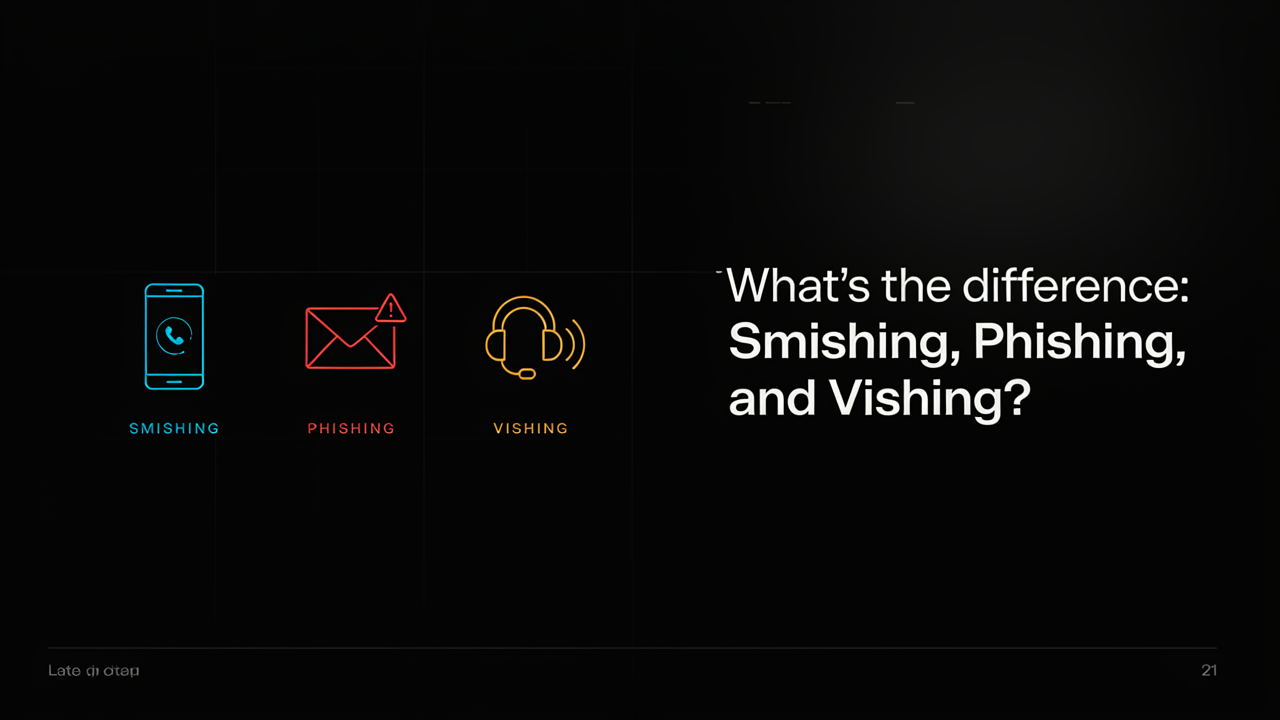
Smishing, vishing, and phishing are all types of social engineering attacks. They trick people into giving up sensitive information. The main difference is the channel used: email for phishing, SMS for smishing, and phone calls for vishing.
Phishing: What Is It?
Phishing is a cyberattack that uses deceptive emails to trick recipients into revealing sensitive information. Attackers impersonate legitimate organizations like banks, social media platforms, or government agencies.
Smishing: What Is It?
Smishing is phishing via SMS text messages. Attackers send fake texts that appear to be from trusted sources. The messages often contain links to fake websites or ask for personal information.
Vishing: What Is It on Smishing, Phishing, and Vishing?
Vishing is voice phishing. Attackers use phone calls to trick victims into revealing sensitive information. They may impersonate bank representatives, tech support, or government officials.
How to Recognize Vishing, Smishing, and Phishing Scams
To recognize these scams, look for urgent language, requests for personal information, suspicious links, and unexpected communications from unknown senders.
What Are Phishing, Smishing, and Vishing — and Why Do They Keep Evolving?
These attacks keep evolving because they are effective. Attackers constantly adapt their methods to bypass security measures and trick more people.
What Is Phishing? How Email-Based Deception Became the Most Common Cyberattack
Phishing started as simple email scams and has evolved into sophisticated attacks. Attackers now use personalized emails, fake login pages, and social engineering to trick victims.
What Is Smishing? Why Text Message Scams Are Surging Worldwide
Smishing attacks are surging because people trust text messages more than emails. Attackers use SMS to send fake delivery notifications, bank alerts, and government warnings.
What Is Vishing? Understanding Voice Call Fraud and Phone-Based Social Engineering
Vishing attacks use phone calls to trick victims. Attackers may use spoofed caller IDs to appear legitimate. They often create a sense of urgency to pressure victims into acting quickly.
Phishing vs Smishing vs Vishing: A Side-by-Side Breakdown of How Each Attack Works
| Attack Type | Channel | Method | Example |
|---|---|---|---|
| Phishing | Fake email with malicious link | “Your account has been compromised. Click here to reset your password.” | |
| Smishing | SMS | Fake text message with link | “Your package is delayed. Track it here.” |
| Vishing | Phone | Spoofed call with social engineering | “This is your bank. We detected suspicious activity on your account.” |
What Do Attackers Actually Want? The Real Goals Behind Each Type of Attack
Attackers want login credentials, financial information, personal data, or access to secure systems.
Real-World Examples of Phishing, Smishing, and Vishing Attacks That Fooled Smart People
Also read: 4 Ways to Fix a Hacked Facebook Account and Secure It
- Phishing: Fake PayPal email asking to confirm account details
- Smishing: Fake USPS text about a package delivery
- Vishing: Fake IRS call threatening legal action
Why Are These Attacks So Effective? The Psychology Scammers Exploit
Attackers exploit fear, urgency, curiosity, and trust. They create scenarios that make victims act without thinking.
How to Recognize a Phishing Email Before You Click Anything
Look for suspicious sender addresses, poor grammar, urgent language, and unexpected attachments or links.
How to Spot a Smishing Text: Red Flags in SMS Messages You Should Never Ignore
Red flags include unknown senders, urgent language, requests for personal information, and links that look suspicious.
Warning Signs of a Vishing Call and What to Do While You’re Still on the Phone
Warning signs include requests for personal information, pressure to act quickly, and caller ID that looks suspicious. Hang up immediately.
Who Is Most at Risk? The Individuals and Businesses These Attacks Target Most
Individuals with online accounts and businesses with employees who have access to sensitive data are most at risk.
How AI and Deepfake Technology Are Making Vishing and Smishing Dramatically More Dangerous
AI allows attackers to create convincing fake voices and personalized messages. Deepfake technology makes it harder to distinguish real from fake.

What Should You Do Immediately If You Clicked a Phishing Link or Responded to a Smishing Text?
Change your passwords immediately. Enable two-factor authentication. Run a full antivirus scan. Monitor your accounts for unusual activity.
How Businesses Can Train Employees to Recognize and Resist All Three Attack Types
Conduct regular training sessions. Use phishing simulations. Provide clear reporting procedures.
What Features Should You Look for in Anti-Phishing and Security Awareness Training Software?
Look for simulation tools, reporting features, training modules, and analytics.
Phishing Protection Tools vs Security Awareness Platforms: Which Does Your Business Actually Need?
Both are important. Protection tools block attacks. Training platforms educate employees.
How Much Does Phishing, Smishing, and Vishing Cost Businesses — and What Does Prevention Cost?
Attacks cost businesses millions. Prevention costs are much lower.
Where to Find Phishing Simulation and Security Awareness Training Solutions for Your Organization
Visit Cardswipe.cc for security tools. Visit Worlddumps.com for anti-detect browsers.
How to Report a Phishing Email, Smishing Text, or Vishing Call to the Right Authorities
Report phishing emails to the FTC or Anti-Phishing Working Group. Report smishing texts to your carrier. Report vishing calls to the FCC.
Visit Cardswipe.cc to get Non VBV BINs or buyccfullz.com to get clone cards, legit dumps with pin and carding materials, also visit elitesource.tech to get money swift money transfer service which includes bank transfer, paypal, cashapp, venmo, zelle and western union transfers.
Also read: Secret Methods Hackers Use to Break Into Bank Accounts
FAQ on Smishing, Phishing, and Vishing
What is the difference between phishing, smishing, and vishing?
Phishing uses email, smishing uses SMS, and vishing uses phone calls.
What is phishing?
Email-based deception to steal information.
What is smishing?
Text message scams.
What is vishing?
Voice call fraud.
Why do these attacks keep evolving?
Because they are effective.
What do attackers want?
Login credentials, financial info, personal data.

How do I recognize a phishing email?
Look for suspicious sender addresses and urgent language.
How do I spot a smishing text?
Look for unknown senders and suspicious links.
What are warning signs of a vishing call?
Requests for personal info and pressure to act quickly.
Who is most at risk?
Individuals with online accounts and businesses.
How is AI making these attacks more dangerous?
Deepfake voices and personalized messages.
What should I do if I clicked a phishing link?
Change passwords and run a security scan.
How can businesses train employees?
Use simulations and training modules.
What features should I look for in anti-phishing software?
Simulation tools, reporting, training modules.
How much do attacks cost businesses?
Millions of dollars.
Where can I find security awareness training?
Cardswipe.cc and Worlddumps.com.
How do I report these attacks?
Report to FTC, carrier, or FCC.
